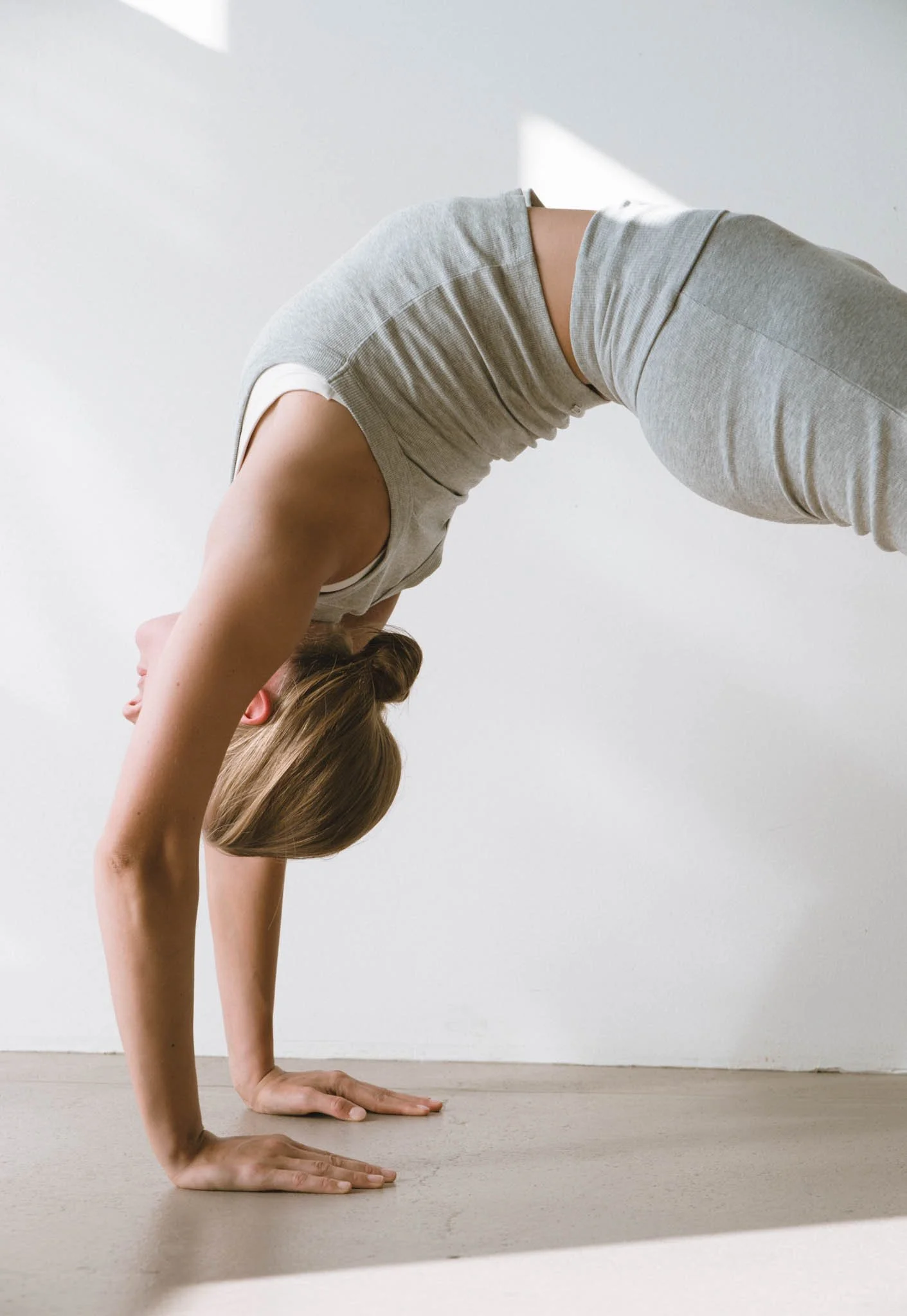
The goal is to experience
Yoga asanas are invitations.
They’re asking: What is here today?
Yoga is often seen as the physical practice of asanas - balancing poses, uncomfortable chair variations, and poses focused on stretching. But asanas are actually instruments for the inner journey, guiding awareness into this moment and into the body.
Like for many others, yoga started for me as a physical practice. It was all about how I performed the asanas. Each class felt like I would need to be better than what I was yesterday. I remember a yoga teacher once asking me why I wanted to take the Camel pose further than what it already was. I answered that I wanted to see how far I could go.
I don’t think there was anything wrong with that. The discipline I learned during those years is something I’ve carried with me in a healthy way. But now, being a little more aware, I would ask myself the same question. The point is to explore, not to perform. So if I choose to take a pose further, it comes down to honestly asking myself: why am I doing this? Two people can be in the same pose - one is performing and focusing on the outside and the other is experiencing and in the pose.
I thought it would make me a better yogi - more advanced if I progressed with the asanas. Advanced” is a word many of us hear often, but I’ve never really liked it or used it. To me it creates categories: “advanced” and “not advanced,” with the obvious goal being to move into the first box. It made me believe that the purpose of yoga was the postures. If I had to define what “advanced” means now, I would describe it differently: how deeply are you willing to surrender to the practice exactly as you are?
I don’t think I was a particularly disciplined person before yoga, and by that I mean the healthy kind - not giving up on things that matter, while also learning to rest before reaching the point of giving up. I experienced discipline while practicing in 38°C heat for 90 minutes several times a week. Sweat dripped everywhere while I balanced in standing postures and my legs were shaking. It felt a bit awful and amazing.
Whenever I wanted to give up, I focused more and breathed through the moment. As often happens, what we learn on the mat extends into life beyond it. The same discipline followed me later into places where yoga didn’t seem to exist but it was there exactly as it was supposed to be - such as when I wanted to learn photography and make it my profession. I knew I would have to start from the scratch and tolerate of being a very unfinished project. The discipline showed as: ”if the others could do it, I can do it without a doubt” and every time I failed with something and I surely did, I didn’t get stuck with blaming myself but moved on because I was about to be a photographer.
Instead of treating a yoga pose as a shape to achieve, the pose becomes a field of observation. While holding an asana, I notice my breathing, muscle tension, emotions, and thoughts. I notice the moments when I want to quit and the beautiful moments of stillness. The body becomes a mirror for the internal state.
When we stay in an uncomfortable posture and continue breathing steadily, we teach ourselves that we can stay with discomfort in life too.
Every time we avoid discomfort out of fear, we may be teaching ourselves that we cannot handle it. Patiently through practicing we can stay connected with the part of us that is already at peace - our deepest essence. Postures can reveal impatience, fear, competitiveness, resistance and restlessness. Rather than suppressing these, yoga makes them visible. Without that they remain beneath the surface. It is said that the pose begins when comfort ends. It’s not about being in pain, but exploring how discomfort often reveals the internal state.
When we practice alone in a calm environment, lit some candles and simply be with ourselves it can be a pleasant experience because no one’s needing anything from us. But when the life situations outside the mat are in front of us, a different kind of yoga practice starts with other people.
And the other way around - pausing in silence with ourselves can be an experience revealing everything that we’ve buried. That’s why it can become something to avoid and that is a strong message in itself. Asanas are tools on that inner journey, offering benefits so that the awareness can turn more easily in.
Next time you practice asanas, focus on feeling instead of how it looks or where you are with the pose. The magic lies there.